
The Impacts of Agriculture on the Environment
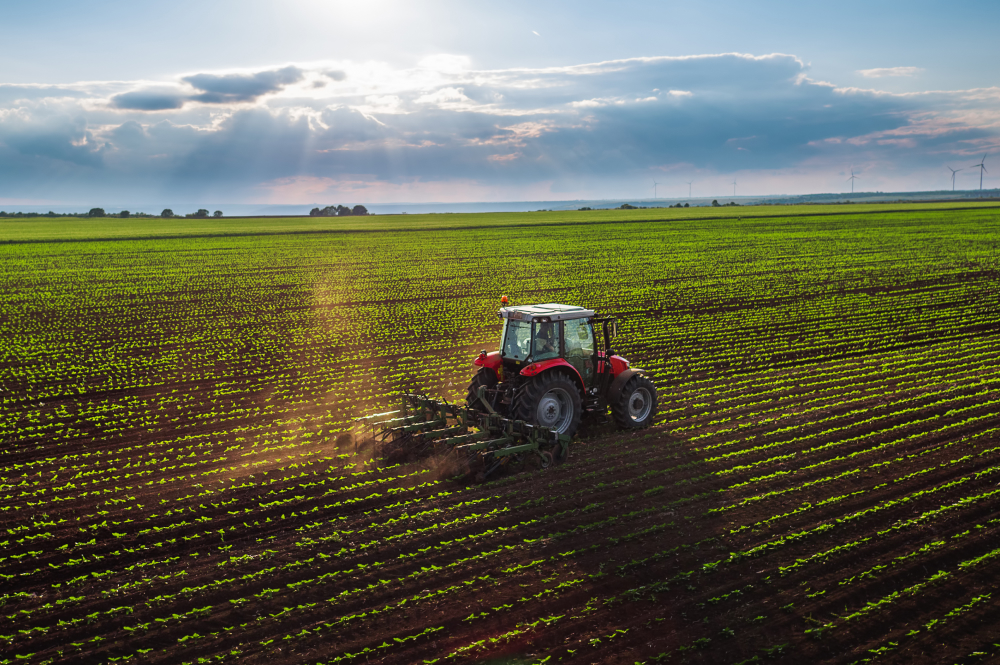
While agriculture has been a fundamental part of human civilisation for millennia, feeding a global population of 8 billion has led to the conversion of vast amounts of the planet’s surface for agricultural activities. This has put critical pressure on the environment, causing damage that may be hard to mitigate.
Negative Effects of Agriculture
Resource Depletion
Globally, agriculture uses nearly 50% of the world’s habitable land, with 71% of the UK’s total land area being used for agricultural purposes,1 meaning less land can be used for housing and development purposes, in addition to reduced land area for natural habitats.
Deforestation is a major factor in reducing climate health; large swathes of the Amazon Rainforest, for example, are being lost to cattle ranching, soy farming for animal feed, and the creation of dam infrastructure. What’s more, the rise of illegal leather farming is further contributing to a loss of land, increasing the amount of carbon released into the atmosphere, and reducing the water naturally released from the Amazon Rainforest.
Furthermore, agriculture greatly impacts water supply, with farming accounting for 70% of global freshwater withdrawals, leading to water scarcity.2
We are also witnessing considerable soil degradation due to industrial activities, such as intense tilling and ploughing, resulting in a loss of nutrient-rich topsoil. Worryingly, this could threaten future food supply due to reduced crop yields and decreasing nutritional density.
Emissions Footprint
Farming is responsible for one-quarter of global greenhouse gas emissions, with livestock accounting for more than 31% of total emissions.3 These emissions arise from various activities, including the management of animal waste, the production of animal feed, and changes in land use such as deforestation for grazing or crop cultivation.
Methane
Methane (CH4) is primarily produced in the natural digestive systems of livestock, such as cattle, sheep and goats, during the digestion process. Additionally, storing their manure, often used as fertiliser on crops, releases methane gases into the atmosphere, which eventually traps heat in the air and contributes to Earth’s rising temperatures.
Nitrous Oxide
Nitrous Oxide (N2O) is a greenhouse gas that is released when synthetic and organic nitrogen-based fertilisers are used during agricultural processes. The gas is produced within the soil during the Nitrification and Denitrification processes, which warms the atmosphere and contributes to the depletion of the ozone layer.
Carbon Dioxide
Carbon Dioxide (CO2) is one of the most well-known greenhouse gases and is prevalent in the agricultural industry. Large amounts of CO2 are released during land clearing, such as deforestation, in addition to the transportation of crops and food.
Pollution
Agricultural processes release pollutants into the atmosphere. Excess nitrogen and phosphorus from fertilisers run into rivers, streams and oceans, causing eutrophication and creating algal blooms which deplete oxygen in water sources. This creates ‘dead zones’ where aquatic life cannot live because of lack of oxygen.
Furthermore, pesticide usage contaminates groundwater and harms non-target species, such as bees, affecting reproduction and behaviour, ultimately leading to declining population and biodiversity loss.
Solutions
One of the most favourable ways to tackle the negative impacts of agriculture is by adopting regenerative agriculture, which involves using a holistic approach to farming that focuses on restoring land and increasing biodiversity, to reverse climate change effects. This type of farming encourages better protection of soil, such as retaining moisture, and implementing efficient crop rotations to encourage a range of insect and plant species to thrive.
Additionally, technology such as AI could be utilised. A great example of this is by using technology to apply fertiliser and water to crops only when and where needed, helping to reduce water waste.
To secure a future for both us and our environment, we must bridge the gap between ecological restoration and agricultural efficiency.
1 GOV
2 Tunley