
Sustainable Cities and Urban Planning
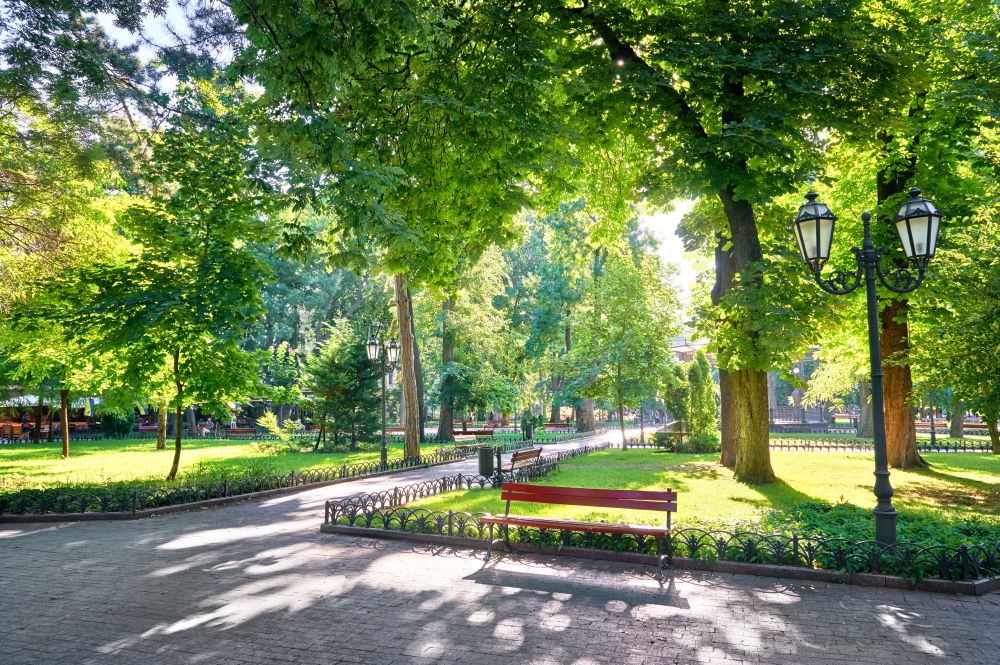
Sustainable Urban Planning is the practice of designing cities that are environmentally friendly, economically viable and socially equitable.
The Need for Sustainable Urban Development
Cities produce an estimated 70% of global greenhouse gases.1
However, sustainable cities help to reduce pollution, enhance resources and keep long-term environmental impacts to a minimum. Urban planning for sustainable cities is the act of creating neighbourhoods that address climate change, promote healthier living environments and better air quality, and are better equipped to handle future challenges like population growth and climate impacts. This is done through a variety of ways, many of which we discuss below.
Additionally, sustainable cities also reduce the Urban Heat Island Effect, where cities are significantly warmer than surrounding rural areas, caused by tall buildings trapping heat, energy from vehicles and less green space.
The Pillars of Urban Sustainability
Promote Green Spaces
Urban parks and green spaces are actively promoted in sustainable city planning as crucial components of ecological, social, and economic well-being. These areas deliver vital ecosystem services, such as improved air and water quality, and enhanced biodiversity. They also promote community health and social interaction, providing recreational opportunities and supporting physical and mental well-being.
Walkable Neighbourhoods
Many sustainable cities are built with size in mind. They are often referred to as ‘walkable neighbourhoods’ – meaning that residents can easily walk to main amenities (schools, shops, etc.) without the need for using vehicles or public transport. This helps to reduce CO2 emissions from vehicles, whilst also promoting accessibility for communities, allowing people to have the same opportunities.
Managing Waste and Water
Water is an essential resource and managing it correctly can help the environment. Restoring waterways is a great way to encourage ecological growth, in addition to enhancing urban water bodies.
This is often referred to as the Sponge City Concept, whereby cities are treated like natural sponges to absorb and release rainwater, via permeable pavements and wetlands.
Living Roofs
Living roofs, or green roofs, are those covered in vegetation. Their main purpose is to create habitats for wildlife, which boosts biodiversity, but they also help to improve air quality, remove urban heat, manage stormwater and provide extra insulation for the building.
Living roofs can range from simple sedum mats, to larger, deep soil gardens, that can be installed on both new or existing buildings.
Solar Panels
Solar panels are a fundamental part of sustainable urban cities, as they help reduce the reliance on fossil fuels, producing clean energy with lower carbon emissions. Solar panels are common on commercial buildings in all cities, however, in sustainable cities, they are regularly integrated into individual homes too.
Future Proofing
Futureproofing is a main feature of sustainable city planning, ensuring that the needs of the current residents are met without compromising the ability of future generations to meet their own. This approach looks beyond immediate concerns and instead anticipates and mitigates future challenges, such as addressing climate change impacts and resource reduction. The goal of this is to create communities that are adaptable and durable.
Ways in which cities are future-proofed include prioritising renewable energy, integrating robust public transport links, and protecting land.
Community
Along with prioritising futureproofing, sustainable cities have a strong focus on the community as a whole, promoting public health and inclusivity. Although urban planning can often focus on the environment, nurturing the community and a city’s people is just as important.
One way that sustainable cities do this is by offering affordable housing (often energy-efficient homes), which creates economic stability, in turn helping to ensure the long-term viability of the community.
Protect Ecosystems
Of course, an important aspect of sustainable cities is balancing ecological health with urban growth. This is achieved in several ways, including integrating green spaces and implementing nature-based solutions, such as restoring ecosystems. Reintroducing native plants to the area is a great way to boost biodiversity and encourage wildlife back to the area post-construction, in addition to focusing on forestry to absorb pollutants and create cleaner air.
Paving the Way
Oslo
Oslo, Norway, is making significant strides towards becoming a carbon-neutral nation, partly through an ambitious goal to cut emissions by 95% by 2030. A key driver of this effort is the substantial investment in electric vehicle (EV) adoption, with most new car sales now comprising EVs, plug-in hybrids, and hybrids, moving away from traditional fossil-fuelled vehicles.
These efforts extend to urban planning, with 116 square meters of green space provided per capita. Also, the country is actively preserving green spaces and increasing flower meadows to support pollinator populations. This has resulted in improved air quality, successfully meeting the air pollution targets set by the World Health Organisation.
Zurich
Zurich, Switzerland, is committed to achieving climate neutrality by 2040, with key features supporting this goal including extensive green space, low levels of air pollution, and an excellent public transportation system.
Significant efforts are focused on renewable energy projects, such as utilising waste heat in heat pump systems to supply green energy to residential areas.
To reduce emissions and discourage individual vehicle use, substantial investment has been made in expanding cycling networks and public transport. Furthermore, strict pollution controls are in place to maintain the cleanliness of Lake Zurich, protecting both its recreational use and its ecosystems.
Vancouver
Vancouver, Canada, recently named the most sustainable city in the world by Forbes, is a sustainable city that others can learn from. Scoring 101.71 on the Forbes green city list that takes into account green space availability, Vancouver’s level of renewable energy usage, air pollution, public transportation efficiency and bike-ability, demonstrates the results of working towards a more environmentally friendly city.2 Additionally, 31% of all energy comes from renewable sources, with a goal of 100% of energy coming from renewable sources by 2050, demonstrating their commitment to continuing on their sustainability journey.3
1 UN Environment Programme
2 Forbes