
Running Dry: The Urgent Case for Rethinking How We Use Water
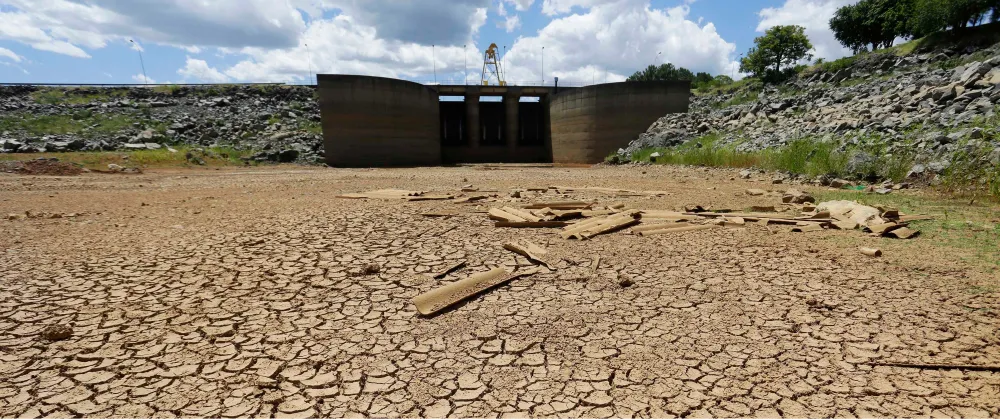
It is easy to take water for granted. Clean water arrives at the tap on demand; used water disappears down the drain without a second thought. Yet behind that seamless convenience lies an increasingly strained system — one being tested by climate change, population growth, and decades of overconsumption. The question is no longer whether the world has a water problem. It is whether we are willing to act before the taps run dry.
The Scale of the Problem
Water scarcity is not a distant threat confined to arid regions. In the United Kingdom alone, average daily water consumption reached 146 litres per person in 2020, a figure that has risen every year since 2014. The Environment Agency has estimated that England will require an additional 3,435 million litres of water per day for public water supply by 2050 if no action is taken — and that figure does not even account for the water needed by industry, agriculture, and the natural environment.2
Globally, the pressure is greater still. Agriculture accounts for roughly 70% of total water use worldwide, meaning that the food on our plates and the goods we consume carry a vast and largely invisible water footprint. Many businesses are only beginning to recognise the risk that water shortages pose to their operations and supply chains.2
Climate Change Is Making Things Worse
The relationship between water and climate is tightening in ways that leave little room for complacency. Rainfall patterns across Europe, China, and North America are already shifting, and the changes are expected to intensify. Summer rainfall in England is projected to decrease by approximately 15% by the 2050s, even as rising temperatures drive higher demand.2
The consequences extend underground. Groundwater supplies around 65% of drinking water across Europe, yet over-abstraction for agricultural and human use is steadily depleting these reserves. In parts of southern and eastern England, groundwater already accounts for up to 100% of public water supply. When those reserves fall, rivers suffer: reduced flows make water bodies more susceptible to algal blooms and nutrient loading, degrading both water quality and biodiversity. And poor-quality water requires more treatment before it can be used — raising costs at every point in the chain.2
Treating Wastewater: An Underused Resource
For most people in developed nations, the water that leaves their homes, schools, and workplaces is contaminated and then, ideally, treated. Across Europe, wastewater is collected, transported to urban treatment plants, cleaned of components harmful to the environment and human health, and returned to nature. Access to clean water and functioning sanitation is embedded in Goal 6 of the United Nations Sustainable Development Goals — and for good reason.1 The investment required to build and maintain these systems has been enormous.
Yet treatment infrastructure alone is not the answer. The challenge ahead is not just cleaning dirty water but using clean water more wisely in the first place. That is where the concept of water neutrality enters the picture.
What Is Water Neutrality — and Why Does It Matter?
Water neutrality means that total water use after a development must be equal to or less than water use before it.2 In other words, growth — residential, commercial, industrial — should not increase aggregate demand on the water supply. Where possible, it should reduce it.
In September 2021, Natural England designated the first Water Resource Zone in the UK, covering the Sussex North area. All new commercial, educational, and residential developments in the zone must demonstrate water neutrality before planning permission can be granted, a direct response to the over-abstraction that had been damaging the ecology of the Arun Valley. Similar requirements are expected to follow in other water-stressed areas, particularly across the South East and East Anglia.2
The implications for businesses and developers are significant. Water neutrality requires a shift in how organisations plan and operate — from identifying and monetising water risks to setting measurable reduction targets, reusing and recycling water where possible, and embedding water management into wider sustainability strategies.
From Risk to Opportunity
The case for action is not purely defensive. Water neutrality brings tangible benefits: lower operational costs, greater supply chain security, reduced environmental impact and enhanced resilience against extreme weather events. Companies that get ahead of water risk will be better positioned as regulatory pressure increases and water stress becomes more widespread.
A corporate water strategy built around a clear management hierarchy — reduce demand first, then reuse and recycle, then offset where unavoidable — gives organisations a credible path forward. Water resource assessments can identify specific opportunities to improve security and enable business continuity, while also contributing to climate adaptation and biodiversity goals.
The Bigger Picture
The challenge of water management sits at the intersection of infrastructure, climate science, land use, and human behaviour. Solving it requires urban treatment systems that can handle 21st-century volumes and pollutants, regulatory frameworks that reflect the true scarcity of freshwater, businesses that treat water as a strategic resource rather than a utility, and individuals who understand that the water disappearing down the drain is not simply gone.
The technology and knowledge to do better already exist. What remains is the will to apply them — before the deficit becomes irreversible.
References
1 European Environment Agency. Urban Waste Water Treatment for 21st Century Challenges.