
The Rise of Solar Panels – Are They Beneficial?
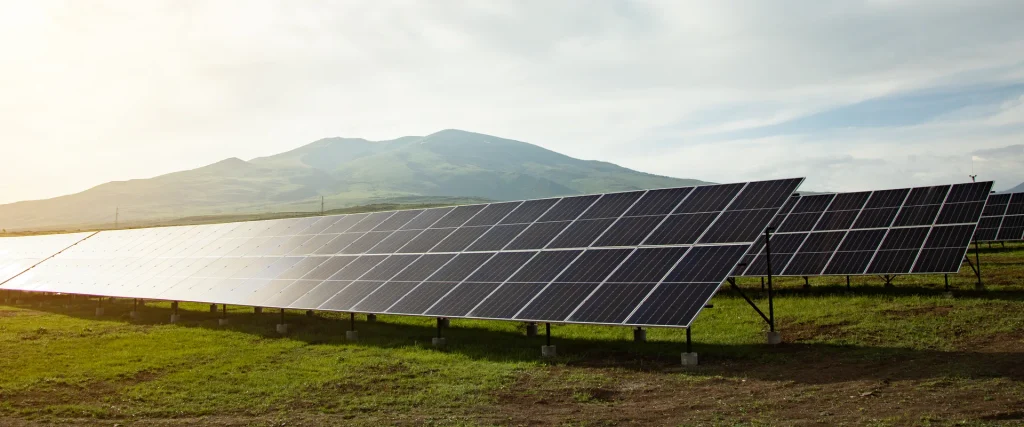
Solar panels have moved from a niche technology to a familiar sight on rooftops, warehouses and fields across the UK. By the end of March 2026, the number of solar installations in the UK had passed two million, with total capacity reaching 22.1 gigawatts (GW).¹ With the Government targeting up to 47 GW by 2030, the question is no longer whether solar will play a part in the UK’s energy mix, but whether it is the right choice for those considering it.
A Record Year for Solar
2026 has been a standout year for solar in the UK. On 23 April, solar generation across Great Britain peaked at just over 15 GW, a new record, while gas fell to just 1.2% of the generation mix.² Summer then delivered record output, with solar generating 8.8 terawatt-hours (TWh) between June and August, up 23% on the same period in 2025. July alone produced 3.3 TWh, meeting 15% of the month’s electricity demand.³
Uptake has been equally strong. Solar Energy UK reported over 229,000 MCS-certified installations by mid-September, already surpassing the previous annual record set in 2011, with around 300,000 expected by the end of the year.⁴
Policy Driving Growth
Much of this growth has been shaped by policy. The Government’s Solar Roadmap, published in June 2025, sets a target of 45–47 GW of solar capacity by 2030 as part of the Clean Power 2030 Action Plan.⁵ Measures include removing the 1 megawatt (MW) planning cap for non-domestic rooftop installations, a permitted development right for solar canopies over non-domestic car parks, and action on lease agreements that have historically prevented rooftop installations.
New buildings will also play a part. The Future Homes and Buildings Standard is set to come into force in March 2027, covering both new homes and non-domestic buildings, with on-site renewable generation, primarily solar, expected to become standard.⁶ In England, 58% of new homes built in the first half of 2026 already had solar panels fitted.⁴
The Pros
- Lower energy costs – the Solar Roadmap estimates that warehouse operators could cut annual electricity costs by 40–80%, with the sector as a whole potentially saving £3 billion a year.⁵
- Falling installation costs – the cost of ground-mounted solar has fallen by around 50% since 2016.⁵
- Reduced carbon emissions – electricity generated on site displaces grid electricity, reducing Scope 2 emissions and supporting carbon reduction plans, SECR reporting and net zero commitments.
- Energy security – generating electricity on site reduces exposure to volatile wholesale energy prices.
- Low maintenance – with no moving parts, panels require little upkeep and typically have a lifespan of 25 years or more.
- Use of existing space – roofs and car parks that would otherwise go unused can be put to work.
The Cons
- Intermittency – solar panels do not generate at night and output falls considerably in winter, so battery storage or grid supply is still required.
- Upfront investment – despite falling costs, the initial outlay remains significant, and payback depends heavily on how much of the electricity is used on site.
- Grid constraints – larger projects can face lengthy waits for a grid connection, although reforms are under way to clear the queue.
- Supply chain concerns – an estimated third to half of the world’s solar-grade polysilicon is produced in Xinjiang, a Chinese territory, raising concerns over forced labour.⁵
- Site suitability – roof structure, orientation, shading and lease terms can all limit what is achievable.
- End-of-life – panel recycling is still a developing industry, and the volume of panels reaching end-of-life will rise considerably over the coming decades.
Outlook
Solar panels are proving beneficial for a wide range of homes and businesses, with record generation, falling costs and strong policy support all pointing towards continued growth. For organisations with large roof areas and high daytime energy use, the case is particularly strong, offering both cost savings and a measurable reduction in emissions. However, solar is not a one-size-fits-all solution, and organisations should consider site suitability, energy consumption patterns and how solar fits within a wider carbon reduction strategy before investing.
About 2EA
With over 25 years’ experience in energy management, 2EA can help you understand whether solar is the right fit for your company, how it sits within your Carbon Reduction Plan, and how the savings can be captured in your SECR reporting.
For more information, contact 2EA on 01293 521 350 or at info@2ea.co.uk.
Sources
¹ pv magazine – There are now more than 2 million UK solar installations (DESNZ data)
² pv magazine – UK solar generation hits record 15 GW as gas falls to historic low (NESO data)
³ Carbon Brief – Analysis: UK solar power hits record high over summer 2026
⁴ Solar Energy UK – ‘An extraordinary achievement’: 2026 set for record solar power take-up
⁵ GOV.UK – Solar Roadmap: United Kingdom powered by solar
⁶ Building – Future Homes and Buildings Standard will come into force from March 2027