
Climate Change Takes Toll on African Countries
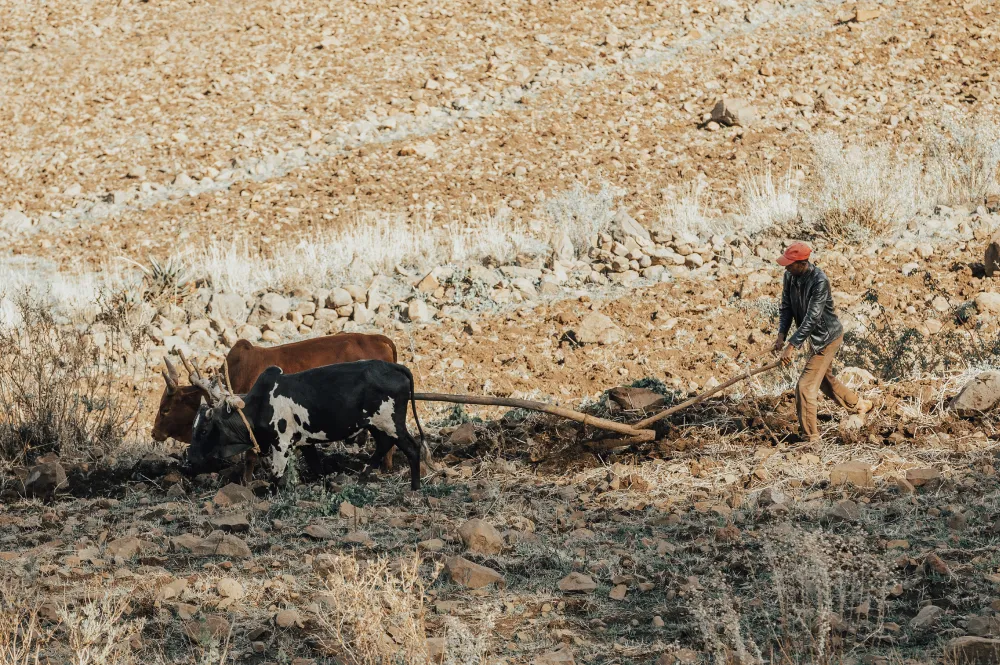
Although Africa contributes less than 4% of global greenhouse gas emissions,1 it unfortunately suffers a large amount of the impacts of climate change.
Erratic Weather
The warming of the planet, caused by burning fossil fuels, is having an impact on every aspect of the environment, with some continents being hit harder than others. Global warming causes erratic and extreme weather, often unpredictable, and is affecting all areas of development in Africa. It is generating food insecurity, exacerbating hunger and causing displacement.
High Temperatures
North Africa has experienced a staggering temperature increase of 1.28°C above the 1991–2020 average,2 establishing it as the fastest-warming area in all of Africa. This escalation in temperature is driving an increase in the frequency and intensity of extreme heatwaves.
These heatwaves pose a severe threat to human health and socio-economic development across the African continent. The high temperatures directly endanger vulnerable communities and place a heavy burden on public health services. Furthermore, the rising heat is directly impacting the education sector, with schools being forced to close their doors during peak temperature periods, negatively affecting the learning outcomes and the future prospects of children.
Additionally, the continent is facing increased challenges with both water scarcity and food scarcity. Higher temperatures limit water resources, creating a critical threat to livelihoods, regional stability and food security for millions of people.
Flooding
On the other end of the spectrum, flooding is affecting East, West and Central Africa. In 2024, over 300,0003 people in South Sudan were affected by flooding. The immediate and visible damage included the destruction of homes and community buildings, displacing hundreds of thousands and rendering critical services inaccessible.
The floods also had a direct impact on the region’s food security. The inundation led to the widespread death of cattle and other farm animals – the primary source of livelihood, protein, and wealth for many families. This loss of livestock, coupled with the destruction of crops and land, has a severe impact on food supply, increasing malnutrition rates. The cyclical nature of these floods means that communities have little time to recover between disasters, leading to long-term economic regression and poverty.
Droughts
Whilst some areas of Africa experience extreme precipitation that leads to flooding, others are being affected by droughts. Driven by heatwaves and reduced rainfall, prolonged droughts have an impact on many areas.
Parts of Africa, such as Zambia, rely on hydroelectric energy generation, and during droughts, they see a rapid decline in the amount of water that can be used. This results in electricity blackouts, disabling heating and cooling for homes and buildings, affecting food storage, and severely impacting medical equipment.
Furthermore, the intensity and frequency of droughts and flooding mean that the soil cannot cope. During droughts, the soil becomes parched, leading to erosion as the protective vegetative cover dies and strong winds carry away the dry topsoil. Flooding then causes significant surface runoff, washing away fertile soil and essential nutrients and compacting the remaining soil, reducing its permeability and ability to support healthy plant life. This severely affects agricultural activity, threatening food security and livelihoods.
Sea Levels
Climate change is not only affecting the land – it’s also having a negative knock-on effect on the oceans. Sea surface temperatures surrounding Africa are the highest on record, with almost all the Ocean area around Africa is being affected by marine heatwaves.
Accelerating rises in sea level fuel coastal erosion, undermining infrastructure and swallowing up valuable land. Furthermore, the higher baseline for sea levels dramatically increases the frequency and intensity of flooding, especially during storm surges and high tides, posing a threat to low-lying communities, vital ecosystems, and economic assets located near the shore.
Communities
All the above have devastating impacts on communities throughout the continent, with poorer communities feeling the impact more severely.
Floods, heatwaves and droughts have forced hundreds of thousands of people out of their homes.
Additionally, in 2024, over 50 million people in West and Central Africa struggled to eat due to crop failures and economic instability.4 This alarming figure demonstrates a reality where unpredictable weather patterns have severely reduced agricultural yields. Consequently, millions found themselves facing hunger, a situation demanding immediate and sustained international aid.
Additionally, hundreds of millions remain without safe water supplies, primarily affecting rural areas. This leads to an increase in the spread of diseases like cholera and typhoid, ultimately causing thousands of deaths each year.
Woodland
Africa’s forests are a vital carbon sink, but in recent years have become a net carbon source due to deforestation and forest degradation. This loss of landscape is driven by agriculture, logging and infrastructure development.
To tackle this, places such as Niger have introduced land restoration projects, including tree cover regeneration, to transform the landscape and help reverse degradation.
A Step Forward
Yet a sense of optimism remains. Renewable energy in several parts of Africa has increased, due to climate finance that has supported wind and solar power. This has helped reduce carbon emissions, in addition to improving electricity access to communities that previously did not have it.
Additionally, in 2023, the Early Warnings For All (EW4All) Action Plan for Africa was launched, which aims to establish comprehensive early warning systems by the end of 2027. The initiative was launched to tackle the increasing number of climate-related disasters, to protect communities by strengthening disaster risk knowledge, monitoring, communication and preparedness, with a specific emphasis on vulnerable, last-mile communities.
Conclusion
Given the uncertain climate future, investment in adaptation measures is crucial to protect lives and economies. Early warning systems are a key component, as they enhance prediction accuracy and allow for issuing of early warning alerts, helping to mitigate risks, build adaptive capacity, and boost resilience to high-impact events. Investing in the National Meteorological and Hydrological Services would also help to improve data collection and forecasting.
1 African Development Bank Group
2 UN News
3 Reuters