
Mining and its Effects on the Environment
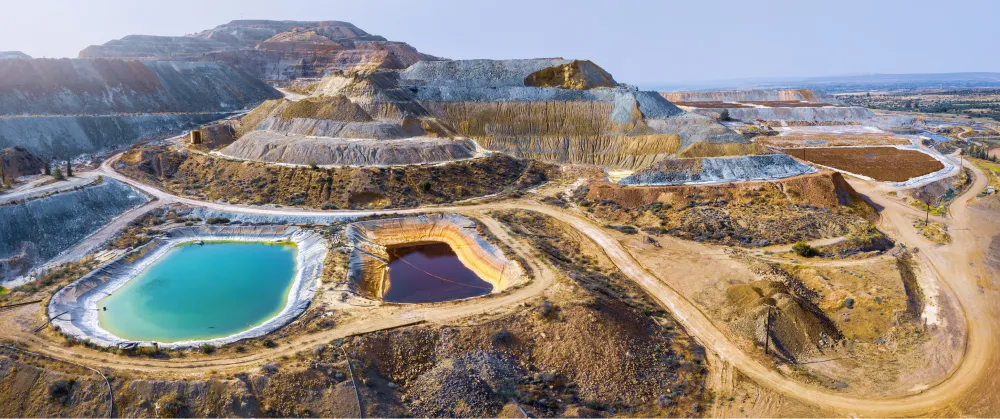
Mining and its Effects on the Environment Mining plays a vital role in modern society. It provides the raw materials needed for construction, manufacturing, energy production and modern technologies. Minerals and metals are essential for everything from buildings and transport infrastructure to batteries, renewable energy systems and consumer electronics.
However, mining can also have significant environmental impacts. Extracting and processing minerals often affects land, water, air quality and ecosystems. As demand for critical minerals continues to rise, particularly for clean energy technologies, the environmental impact of mining has become an increasingly important issue for governments, businesses and communities worldwide.1
Land Degradation and Deforestation
Mining operations often require large areas of land to be cleared before extraction can begin. Surface mining methods such as open-pit mining can remove vegetation, topsoil and entire ecosystems. This can lead to habitat destruction, soil erosion and long-term changes to landscapes.
Deforestation linked to mining is a growing concern in environmentally sensitive areas, including tropical rainforests. Research from the World Resources Institute found that gold and coal extraction accounted for more than 71% of mining-related deforestation between 2001 and 2019.2
The removal of vegetation also contributes to greenhouse gas emissions. Trees and soils store carbon, so clearing land for mining releases carbon dioxide into the atmosphere.3
Water Pollution and Water Consumption
Mining can place considerable pressure on water resources. Large volumes of water are often required for mineral extraction, dust suppression and processing activities.
Mining operations may contaminate nearby rivers, lakes and groundwater through the release of chemicals, sediments and heavy metals. Poorly managed mine waste and tailings (the finely ground rock, water, and residual chemical waste left over after valuable minerals and metals are extracted from mined ore) storage facilities can leak pollutants into surrounding ecosystems, affecting both wildlife and local communities.4
Critical mineral mining has also raised concerns about water stress in already vulnerable regions. According to the World Resources Institute, at least 16% of global critical mineral mines and deposits are in areas facing high water stress.5
Water pollution incidents linked to mining can have severe environmental consequences. Tailings dam failures, where mining waste storage facilities collapse or leak, have caused widespread contamination and environmental damage in several countries.6
Air Pollution and Greenhouse Gas Emissions
Mining and mineral processing are energy-intensive activities. Heavy machinery, transportation systems and processing plants often rely on fossil fuels, contributing to greenhouse gas emissions.
The UK Parliament’s POST briefing on mining and metals sustainability estimated that mining generated approximately 4.8 billion tonnes of CO2 equivalent emissions in 2015, around 10% of the global annual total at the time.7
Mining activities can also release airborne pollutants, including dust, sulphur dioxide and heavy metals. These emissions may affect local air quality and create health risks for nearby communities and workers.7
Although mining supports the production of renewable energy technologies such as electric vehicle batteries and wind turbines, organisations including the International Energy Agency have highlighted the importance of improving environmental standards throughout the mining supply chain.4
Biodiversity Loss
Mining can disrupt ecosystems and threaten biodiversity through habitat destruction, pollution and changes to water systems. Sensitive environments such as forests, wetlands and coastal areas may be particularly vulnerable.
The United Nations Environment Programme has identified mining as a contributor to biodiversity loss, ecosystem degradation and pollution.8
Species may lose breeding grounds, food sources and migration routes as mining infrastructure expands. In some cases, environmental impacts continue long after mining operations have ceased due to contaminated land and abandoned waste sites.
Critical Minerals and the Energy Transition
The transition to low-carbon technologies has increased global demand for minerals such as lithium, cobalt, nickel and rare earth elements. These materials are essential for batteries, solar panels, wind turbines and energy storage systems.
While these technologies support decarbonisation, increased mining activity presents environmental and social challenges. The International Energy Agency has warned that demand for critical minerals could significantly increase pressure on water resources, biodiversity and local communities if mining is not managed responsibly.4
Recent reporting has also highlighted concerns around pollution, water depletion and environmental degradation linked to critical mineral extraction in vulnerable regions.9
Reducing the Environmental Impact of Mining
Governments, regulators and mining organisations are increasingly focusing on more sustainable mining practices. Several approaches can help reduce environmental impact, including:
- Improving water management and wastewater treatment
- Restoring land after mining operations end
- Reducing energy consumption and emissions
- Increasing recycling and reuse of minerals
- Strengthening tailings management and site monitoring
- Improving environmental regulations and ESG standards
The United Nations Environment Programme and the International Energy Agency have both emphasised the importance of responsible mineral sourcing and sustainable resource management to support future energy and industrial demands.4,10
Recycling also has an important role to play. The International Energy Agency states that increasing recycling rates for critical minerals can help reduce the environmental impacts associated with new mining and refining activities.11
Conclusion
Mining remains essential for economic development, infrastructure and the global energy transition. However, it can also create serious environmental challenges, including deforestation, pollution, greenhouse gas emissions and biodiversity loss.
As demand for minerals continues to grow, particularly for renewable energy technologies, balancing resource extraction with environmental protection will become increasingly important. Sustainable mining practices, stronger regulation, improved waste management and increased recycling will all play a key role in reducing the environmental impact of mining in the years ahead.
References
- United Nations Environment Programme, “The green energy transition and mining”
- World Resources Institute, “How Mining Impacts Forests”
- Earth.Org, “Environmental Problems Caused by Mining”
- International Energy Agency, “The Role of Critical Minerals in Clean Energy Transitions”
- World Resources Institute, “Critical Minerals Mining and Water Impacts”
- United Nations Environment Programme, “Global Industry Standard on Tailings Management”
- UK Parliament POST, “Sustainability of the Mining and Metals Sector”
- United Nations Environment Programme, “Extractives”
- The Guardian, “Critical minerals are the oil of the 21st century as demand fuels poverty and pollution in poorer countries”
- United Nations Environment Programme, “UNEP and IGF strengthen collaboration on environmental sustainability in minerals and metals”
- International Energy Agency, “Recycling of Critical Minerals”